

From The Inner Ascent, a series within The Ascent Within
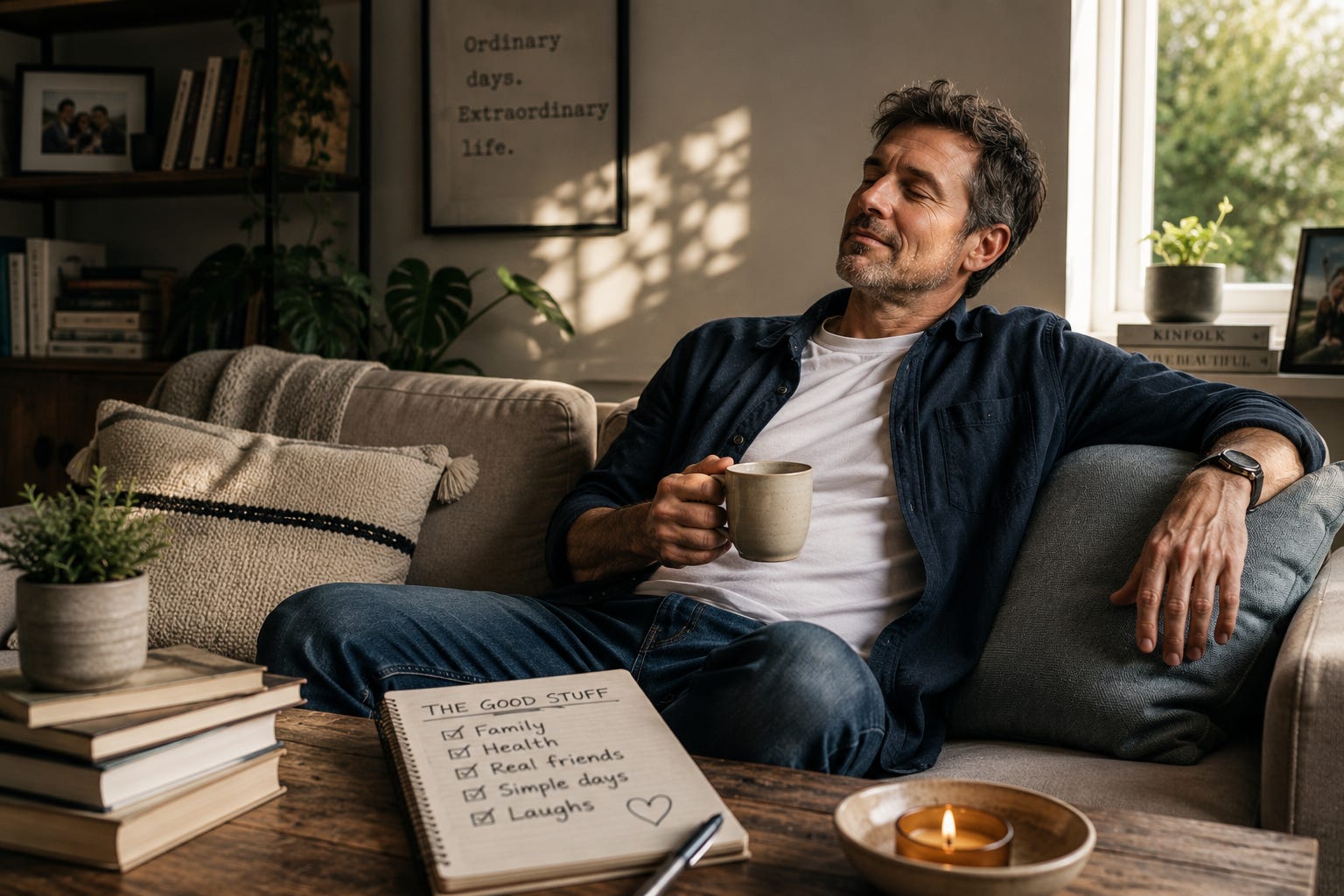
I think I spent quite a lot of my younger life trying to become something.
I don’t mean that negatively. I wanted to do well, earn decent money, have a nice home and build a life I could be proud of. When I eventually started my own business, I wanted that to succeed too. There was ambition behind a lot of the decisions I made, and I still don’t think there’s anything wrong with ambition.
What I probably understood less well was how easily wanting to do well can turn into wanting other people to know you’re doing well.
There were times when I didn’t just want something because it would improve my life. I wanted what having it would say about me. The business, the contracts, the money and all the other little signs that suggested things were moving in the right direction became evidence that I was getting somewhere.
That’s not particularly comfortable to admit, but in fairness, I suspect I’m not the only person who’s done it.
We spend a lot of our younger years being encouraged to make something of ourselves. Get a decent job. Work hard. Move up. Earn more. Buy the house. Build something. Improve yourself. None of those things are inherently bad, but they can create a strange situation where almost every stage of life becomes preparation for the next one.
You reach something you’d been working towards and enjoy it briefly before your attention shifts to whatever comes next.
I’ve certainly done that.
What’s interesting is that I haven’t become less ambitious as I’ve got older. I’m 50 and I’m still starting things, writing, learning, exercising and coming up with ideas that will probably create more work for myself. My family would probably tell you I’ve shown very little sign of learning how to sit still.
The difference is that I’m starting to question what I expect achievement to give me.
I still enjoy accomplishing something. I just don’t need it to prove quite as much as I once did.
These days, some of the things I genuinely enjoy would have sounded incredibly ordinary to my younger self. A decent walk. Sitting somewhere having a coffee with no particular rush to leave. Everyone being home for a meal. Getting a workout done, sorting a few jobs and discovering I’ve got an afternoon with nothing that urgently needs my attention.
At 25, I’d probably have wanted to know what we were doing afterwards.
At 50, that can be the day.
I don’t think younger me would have found that particularly impressive.
I’m not sure current me cares.
Perhaps that’s what has changed most.
For a long time, I associated an ordinary life with settling. The word itself doesn’t exactly sound aspirational. Nobody asks a child what they want to be when they grow up and hopes they’ll answer, “Fairly average, thanks.”
We’re encouraged to stand out, fulfil our potential and dream bigger. Again, I understand why. I’d tell my own children to make the most of their abilities. But somewhere within all that encouragement, it’s easy to pick up the idea that an ordinary life is somehow the consolation prize.
I’m beginning to think we’ve got that badly wrong.
Most of life is ordinary.
The big moments are surprisingly rare. There are birthdays, weddings, holidays, promotions, achievements and those handful of days we know we’ll remember for years. But they occupy a tiny percentage of an actual lifetime.
Most Tuesday mornings are just Tuesday mornings.
You make a brew. You go to work. You send a message to someone. You wonder what you’re having for tea. You have a conversation in the car that neither of you will remember a month later. Someone says something stupid at the dinner table and everybody laughs.
For years I probably thought of those moments as the space between the important stuff.
I don’t anymore.
The older I get, the more I realise that if you can’t find some enjoyment in ordinary days, you’re asking a relatively small number of extraordinary ones to do an awful lot of work.
That doesn’t mean I’ve suddenly abandoned goals. Far from it. I enjoy challenging myself, and I hope I always will. What I’m becoming less interested in is turning everything I enjoy into another test of whether I’m doing well enough.
We’re remarkably good at that.
Go for a walk because it clears your head and before long you’re checking whether you’ve hit 10,000 steps. Start exercising because you feel better afterwards and suddenly you’re comparing yourself with someone on the internet who appears to have been carved out of granite. Start writing because you enjoy sharing ideas and then find yourself wondering why one post got more views than another.
I’ve caught myself doing all of them.
There comes a point where you have to laugh at how efficiently we can turn enjoyment into admin.
I’m trying to get better at leaving some things alone.
A walk can just be a walk. A workout doesn’t have to be the best one I’ve ever done. Something I write can be worthwhile even if fewer people read it. I can learn about something simply because I’m fascinated by it without immediately wondering where it might lead.
That last one is probably still a work in progress.
The more I’ve thought about this, the more I think the real change isn’t about ambition at all. It’s about where you get your sense of worth from.
If everything has to become an achievement, you never really finish. There will always be someone earning more, doing more, growing faster or reaching something you haven’t. Even your own successes become temporary because yesterday’s goal quickly becomes today’s normal.
I’ve lived enough of that cycle to recognise it now.
What feels different at this stage of my life is that I’m becoming more interested in whether I actually enjoy the life surrounding the goals.
That’s a question I wish I’d asked myself more often when I was younger.
Not, “Am I doing enough?”
But, “Do I like the way I’m spending my days?”
Because the days are the bit we’re actually living.
It’s possible to spend years building towards a future version of life and barely notice the perfectly decent one already happening around you. I’ve done that at times, particularly when work or business became all-consuming. You convince yourself things will settle down after the next problem is solved, the next target is reached or the next busy period passes.
Then another one arrives.
Life doesn’t really announce when the good bit starts.
Quite often, you’re already in it.
I think that’s why being comfortable with ordinary has started to feel less like settling and more like a form of freedom.
It means I can still want more without believing what I already have isn’t enough. I can work towards something without asking it to make me more important. I can enjoy doing something I’m average at. I can have a completely uneventful Sunday and not feel as though I’ve wasted it.
I’m certainly not claiming I’ve perfected any of this. Give me something measurable and there’s still a reasonable chance I’ll start keeping score.
But I notice it now.
And sometimes that’s enough to make me put the phone away, stop checking the number and get back to whatever I was enjoying before I decided to measure it.
When I think about the parts of my life that have mattered most, surprisingly few of them looked impressive from the outside.
They were conversations, meals, walks, family moments, stupid jokes, difficult periods we somehow got through and ordinary days with people I care about.
Most of them didn’t feel particularly significant while they were happening.
Maybe that’s the part I’ve taken far too long to understand.
An ordinary life and a meaningful life were never opposites.
Thanks for reading,
Ian
Rise with clarity and confidence.
Looking to build more calm, clarity, control and confidence in your life?
You can explore more through The 4C’s Method by Ian Callister, a practical framework for bringing a little more calm, understanding and direction into everyday life.
Explore The 4C’s Method → Here
If this reflection has made you think about what drives you, what matters to you and how much of your life is shaped by expectations you’ve picked up along the way, The Inner Ascent – Understand Yourself explores those questions in much more depth, alongside practical exercises designed to help you understand your thoughts, beliefs, values, confidence and identity.
Explore The Inner Ascent – Understand Yourself → Here
Well written. Those expectations were inhaled from our family, culture, and neighborhood. Our primary goal was to survive, not thrive. It seems surviving proved relatively easy. It is also relatively observable - enough food, shelter, and a family.
Thriving is virtually impossible to observe. That makes it difficult to know when to feel enough is enough. Being inundated with daily expectations about exercise, nutrition, and travel, makes enough harder to appreciate.
Great article and totally relatable! I’d also add…since when does a hobby have to become a market stall, Etsy shop and a side hustle? It’s quite humbling living from a place what is rather than the next thing.